With 2026 just getting underway, let’s take a look at one of the most popular traditions to ring in the new year: making resolutions.
New Year’s resolutions date back at least 4,000 years to the ancient Babylonians, who lived in Mesopotamia in the Middle East. During the reign of Julius Caesar, the ancient Romans also made promises and vows for good behavior and self-improvement at the start of the year.
Researchers believe that anywhere from 30% to 50% of all Americans make New Year’s resolutions. The most popular goals set are wanting to be happier and healthier; exercising more and eating healthier are always at the top of Americans’ lists.
I compared these nationwide trends to those of the RMA community, polling Middle and Upper School students to see if they set goals at the start of the year and, if so, what their New Year’s resolutions were. Here’s what I learned.

84% of the students who responded (we heard back from just under half of MS and US students) reported making a New Year’s resolution–far more than the general population! Religion was the biggest focus for students this coming year, with 25% of respondents noting they wanted to grow in their faith. Close behind were goals related to athletics, classes, and health, all of which came in around 20% each. In one way or another, many RMA students want to change for the better this new year!
Perhaps a bigger question than “What is your resolution?” is, “Will you keep your resolution?” Approximately 25% of Americans fail to keep their resolutions through the first month, let alone the first two weeks. By the year’s end, less than 10% of Americans are still sticking with their resolutions.
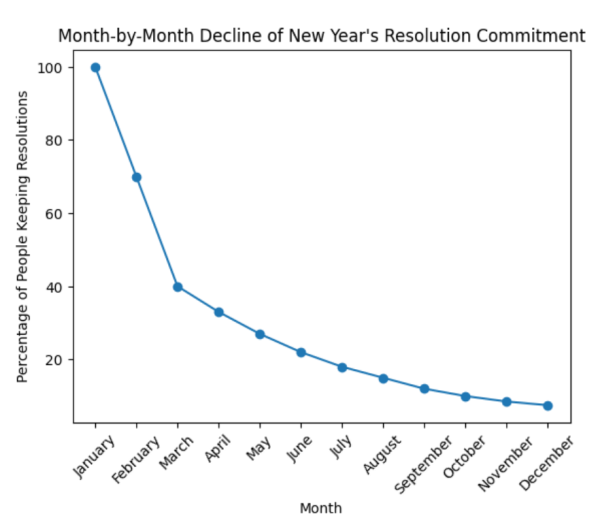 We won’t know until December how well RMA students achieved their goals, but I inquired about students’ past success and found that 47% reported keeping their previous resolutions for at least a year, with most saying they’re still sticking with it today. This means that our students have done much better than Americans in general!
If you want to be part of the small percentage of people who stick to their resolutions, here’s some advice. One of the top ways to succeed in your New Year’s resolutions is to keep them small and very specific. (For instance, set out to raise your grades in English and math by 5 points each.) This is because researchers say one of the main reasons is that people keep their resolutions too broad (“I want to do better in school”), and when they do not achieve their goals in a short span of time, they burn out and think it is pointless to keep going.
Consistency is what helps New Year’s resolutions actually last. Many people start the year feeling motivated, but that motivation often fades quickly. When someone works toward their goal a little bit every day, it becomes a habit instead of just a promise. These small, steady efforts make goals easier to keep and help resolutions continue past the first few weeks of the year.

One thing that’s sure to help you be consistent is having a plan for how you’re going to achieve your goals. Instead of just saying, “I’m going to bring up my math and English grades,” add in what strategies you’ll use to make it happen: “I’m going to bring up my math and English grades by spending 15 minutes a day reviewing my notes.”
Overall, New Year’s resolutions have been a meaningful tradition for thousands of years, and they remain an important way for people to reflect and set goals today. The results from the RMA community show that students not only set resolutions at a higher rate than the general population but are also more successful at keeping them. By setting specific goals, making a clear plan, and staying consistent, students can turn their resolutions into lasting habits and make 2026 a year of real growth and improvement.