

You may have heard of the Seven Wonders of the World–amazing structures built by mankind. Recognizing that our campus also has some pretty impressive places, I wanted to come up with the Seven (Modern) Wonders’ RMA counterparts.
Number One: the Great Wall of China – Dr. K Trail
The Great Wall of China is a fortification over 13,000 miles long that took over 2 millennia (that’s 2,000 years) to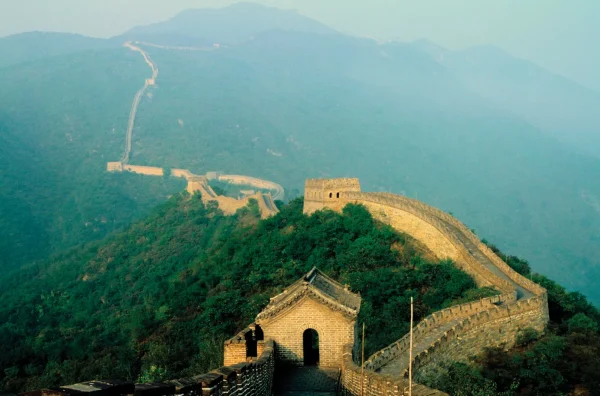 successfully construct and complete. To give some perspective, that is approximately the distance going from the North Pole all the way to the South Pole. Construction to complete this wonder began in the 7th century and ran until the mid-1600s. The wall’s primary purpose was to defend against nomadic groups from the northern regions; however, the wall also served as a means of regulating trade and immigration, as well as serving as a transportation corridor. The wall includes signaling stations, barracks for troops, and garrison stations.
RMA’s Great Wall of China counterpart is the Dr. K Trail that covers over 0.5 miles and borders the south side of our campus. The trail is dedicated to former Middle School science teacher Dr. Bob Koszelak for his selfless nature during his 18 years of teaching and is now maintained by the Conservation Club, by promoting wildlife and going through the trail. The trail is not used for quite the same kind of defense but rather where RMA Eagles run cross-country and defend our status as a great XC school.
Number Two: the Taj Mahal – Josh’s Place
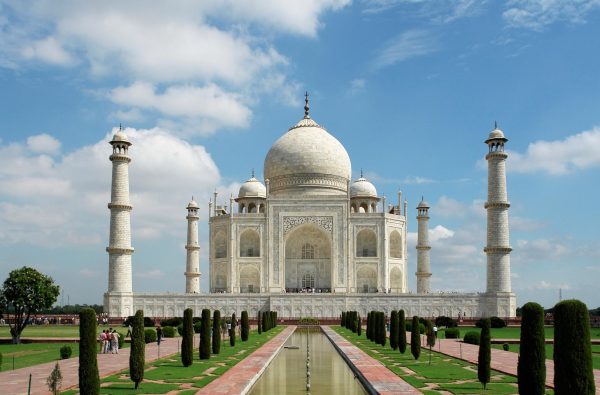 The last of the wonders is the Taj Mahal, a structure located in Agra, India. It was constructed by Emperor Shah Jahān, who ruled from 1628 to1658, to honor his wife, Mumtāz Maḥal. Taking 22 and 20,000 workers to complete, the complex is composed of ivory white marble and is often considered the most recognizable human structure in the world. An interesting fact is that Emperor Jahan wanted another complex built–this time for himself–made from black marble, but it was never done.
One of RMA’s own memorials is Josh’s Place, which honors RMA graduate Joshua Weaver: a respected Rocky Mount Academy graduate, salutatorian, and popular swim coach. Josh sadly passed away in a fire at UNC-Chapel Hill in 1996. Josh is the son of Mrs. Weaver, a longtime second-grade teacher at RMA. The playground is one of two ways (there is also a scholarship) we remember this special young man.
Number Three: Petra – the Library
Next is Petra, an ancient city in Jordan that was carved out of stone in the 8th century. You may be familiar with it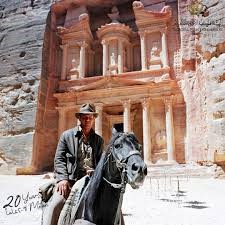 from Indiana Jones and the Last Crusade. The once-thriving city with a peak population of 30,000 remains a place shrouded in mystery. Petra is found in a valley of sandstone cliffs where it is believed Moses (from the Bible) performed one of his miracles. The city was the capital of an Arab tribe that used it as a trade center for spices. It also had an advanced irrigation system, allowing for successful agriculture. Petra is known for its treasury, monastery, royal tombs, theatre, and great temple.
Rocky Mount Academy’s equivalent is the library, which reminds us of the (suspected former) library in the peak of Petra. Both are places flourishing with knowledge and literature.
Number Four: Christ the Redeemer – the Flagpole in the Courtyard
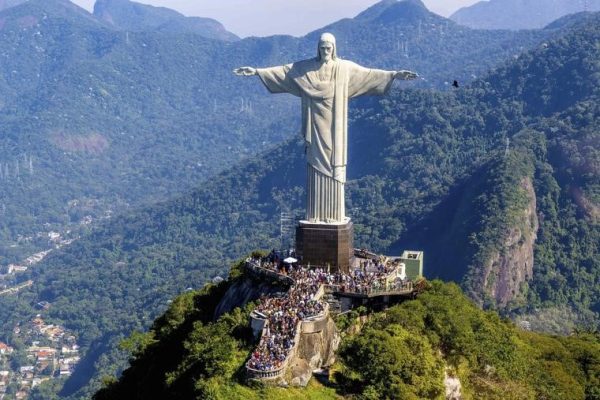 Christ the Redeemer is a well-known and colossal statue of Jesus Christ that stands on top of a mountain overlooking Rio de Janeiro in Brazil. The statue is relatively new compared to the other “wonders,” as it was built just after the First World War. The statue is recognized as the largest Art Deco sculpture in the world. Christ the Redeemer stands tall at 98 feet, not including the 26-foot base it stands on top of. Thanks to more modern technology than the builders of other places on this list had, construction took just five years.
While Christ the Redeemer towers above Rio, RMA has a flagpole that stands around 30 feet and overlooks the RMA campus. The flag stands tall and represents the patriotism of RMA and promotes unity among students.
Number Five: Machu Picchu – Tyler’s Peak
Machu Picchu is a pre-Columbian structure found deep in the Andes mountain range in Peru and confounds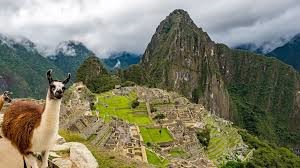 scholars, as its exact construction date is not known (1450 AD is a rough estimate), nor is its original purpose clear; however, it is commonly believed to have been used as an Incan fortress during the 16th century during the Spanish incursion. Manchu Picchu is so special because it’s one of the only Incan structures found in almost perfect condition. The peak stands around 35 meters above sea level, a laborious climb.
RMA’s own peak is Tyler’s Peak, which is a memorial dedicated to Elizabeth Tyler Strandberg, a Rocky Mount Academy graduate from the Class of 2004. The playground may not reach great physical heights due to safety concerns, but it reminds us of Tyler because she loved climbing. The memorial was built in honor of her work as a counselor for developmentally disabled children.
Number Six: Chichen Itza – RMA’s Athletic Fields
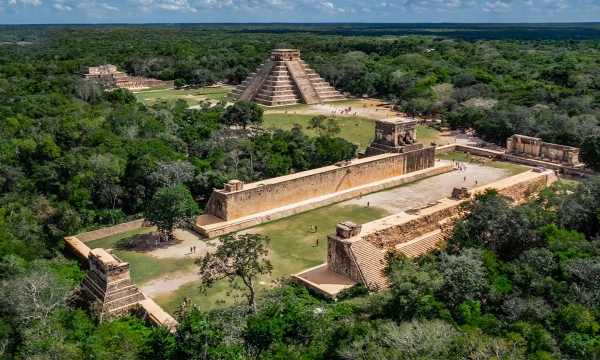 Chichen Itza was a Mayan city that was built in the 5th or 6th centuries and flourished from the 9th through the 10th centuries. The specific Mayan tribe that built the city was the Itza. The Itza constructed impressive structures like monuments and temples. The most commonly known structure is El Castillo, a pyramid temple that was built with the position of the sun in mind (during equinoxes, the sun casts a shadow to create the illusion of a serpent slithering down the pyramid’s staircase) and 365 steps to reflect the 365 days of the calendar year. The city also has one of the largest sporting fields in the Americas. The ball game played there consisted of teams competing against each other to get a rubber ball through an elevated hoop using only their hips and thighs.
It’s the city’s fields and athletics that give us an RMA match-up, but compared to Chichen Itza’s one field, RMA has four: the football field, soccer field, baseball field, and softball field. Add to that the spaces used for track, and we definitely have a leg up on this ancient city!
Number Seven: the Roman Colosseum – Mr. Stone’s Room
Finally, we have the place that housed blood sports, the Colosseum. The Colosseum is located in Rome and was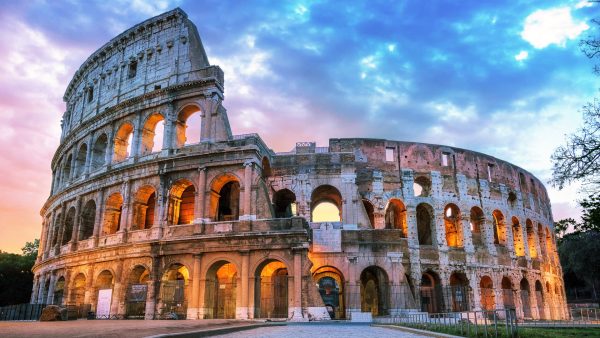 constructed in the first century by Emperor Vespasian. The venue could accommodate over 50,000 spectators who gathered to watch fights between gladiators or animals like lions, tigers, bears, elephants, leopards, rhinoceroses, crocodiles, and many more. The Colosseum also hosted mock naval engagements since water could be pumped in!
A place with stakes nearly as high is Room E-4: Upper School history, government, and psychology teacher Mr. Stone’s room. The room was commissioned by Emperor Stone, who hails from Britain (a place controlled by the Roman Empire for over 400 years), around 2004 AD. Recalling the contests between gladiators and beasts, this classroom has been home to many a battle… of wits! Especially in AP World History, which is offered in 9th grade, students are called upon to dispute answers from past questions.
While the original Seven Wonders of the World represent the pinnacle of human achievement, Rocky Mount Academy’s own “wonders” represent the heart and history of our school. They may not be listed in any history book, but they’ll be remembered by all who call RMA home.


